1 Temmuz 2017 Cumartesi

Borderlands


Today we're headed just over the county boundary into Suffolk. We'll visit three villages and, unsurprisingly, three churches, but it's far too nice a day to spend much time indoors when the scenery's like this....


...but first I had to do a little road walking, though the wild flowers kept me company throughout.


The first village was Gazeley with its large church at the heart of the community. Rather too large a church it appears, as the parish is constantly struggling to keep the fabric of the building intact, not least because so much of both the church and its contents is so old. 


The village itself is pleasant enough though not as perfectly picturesque as the other two on our route.


From Gazeley we can pick up a section of the Icknield Way Trail, a modern approximation of the ancient route, which steers the walker away from roads to visit the most interesting sites and tranquil landscapes. It's also waymarked with little signs fixed to gateposts which saved me looking at the map too often.

The path led through agricultural land before diving unexpectedly into a wood.


There were occasional glimpses through the trees out on to the newly harvested fields. These huge square bales are increasingly common these days. 


An occasional exotic tree was seen by the path and paddocks occupied by fine horses could be glimpsed through the bushes. As I suspected, I was getting near to Dalham Hall. The church appeared first, then the hall itself. It was built in the early years of the eighteenth century by the then Bishop of Ely. It is now owned by Sheik Mohammed bin Rashid Al Maktoum, the Emir of Dubai and the Prime Minister of the UAE, but who's probably better known in these parts as one of the world's leading race-horse owners.


An avenue of trees led me down to Dalham village, one of the lesser-known of Suffolk's many beautiful villages. Impossibly pretty cottages line the street which follows the course of the little River Kennett. 


But there's also a relic of the village's industrial past standing by the roadside...


It's a kiln that was used in the nineteenth century for drying malted grain for use in beer-making. Nearly every village would have had a malting kiln at one time but they have mostly disappeared now. This one looks to be in remarkably good condition.


Then it was time to find the footpath, running parallel to the course of the River Kennett, to complete the final leg of the journey to the village of Moulton,.


Now you might think the picture above is of the path, but no, this is the bed of the river which is dry at this time of year. You could walk along it,of course....now there's an idea....I've never walked along a river bed before......I wonder....


It was good walking for a start, but then I found myself pushing through increasingly dense vegetation and eventually water started to appear. I had to scramble up the steep bank, through the nettles and brambles, over a fence and back on to the path that I should have been following all along.


At length I arrived, a little scratched and stung, in Moulton where the church has a weather-vane in the shape of a large fish, possibly because this is St Peter's and he's the patron saint of fishermen. Whatever the reasoning behind it, a fish looks completely ridiculous stuck up on top of a tower. But Moulton is far more famous as the site of...


....a Medieval pack-horse bridge. Before the Cambridge-Bury St Edmunds-Ipswich railway line and the busy A14 road were built travellers and carriers passed through Moulton and needed to cross the River Kennett. The water level is not always as low as it is in mid-summer; at times the river can flood, so a bridge must have been a worthwhile investment. Although similar bridges are fairly common in some parts of the country, East Anglia has very few.

And that's the end of my walk.......Take care.

On The Road Again


What's On Your Rooftop? 


Since I showed you some boxing hares made of straw on a rooftop in the village of Horseheath I seem to be encountering all manner of beasts perched on the thatch of various Cambridgeshire cottages. I can well understand that someone might want a representation of a pheasant standing guard upon the ridge. But a wild boar.....??


An Unusual Church


A few weeks ago I went out on a walk. I took the camera but I took very few photos. The weather was atrocious, the paths were muddy or non-existent and I became rather grumpy and fed up with the whole enterprise. I now realise that I should have taken some pictures as my mishaps and misery would have made a very entertaining post (for you to read from the comfort of a favourite armchair). But towards the end of my ordeal I came across this odd little church in a village near Baldock. It wasn't open but I did wander around the churchyard and take a snap. That little tower on this end of the building is actually a bell-tower albeit a rather scaled-down example. There's a lot more to investigate here some day.


Two Scenes, Seldom Seen


The Corn Exchange in Cambridge is so well-known as a concert venue that residents of the area say the name without it ever crossing their minds that its original purpose was for the selling and buying of grain; wheat, barley and oats which are collectively known as "corn" in this part of the world. I wonder how many people queueing up to see All Time Low, The Stranglers, or even Joan Baez recently, glanced up to look at these depictions of past times.


The Old Bakehouse


Near to the old well-house that I showed you recently stands this neat little building. It was taken from its original site and rebuilt here in 2005. It's a farm bakehouse and since the oven could take 12 loaves at a time it's almost certain that other villagers would have brought their bread to be baked here. And the tiny building on the right? Yes, it's exactly what you think it is!


Two Good Dogs 


Oddly enough, at a time when pubs are closing all over the country, breweries are still opening! These are small breweries making high-quality, old style ales. Last night my brother and I sampled some Good Dog Ale and very good it was too. Curiously it's brewed in Sussex and sold from a vineyard in Suffolk - yes, we actually have vineyards in East Anglia these days! The label bears the wonderful inscription "Good Dog Ale - makes you want to sit and stay!" 

Take care. 

By The Wayside....


......being another collection of oddities and curiosities from this land called England.


Cromwell's House

Cromwell's house in Ely....

In Ely just a stone's throw from the Cathedral stands this rather fine building which was once the house of Oliver Cromwell. He actually inherited the house and the position of Collector Of Tithes for the Cathedral from his uncle. Cromwell lived a fairly quiet life for his first 40 years, also having a smallholding in St Ives raising chickens and sheep for a while. He was born in Huntingdon and all three small market towns - Ely, Huntingdon and St Ives - claim him as one of their own. Depending on your point of view he was either a murderous opportunist or a great fighter for liberty and equality. He remains the only man to overthrow the monarchy - so far!

....and his statue in St Ives.


Another Lock-up


At the road junction in Barley stands another lock-up where troublemakers were apprehended until they could be dealt with by the courts. It doesn't look a particularly comfortable place to spend the night as there's neither the room to stand up or lie down; better to cause trouble elsewhere!


Unique Pub Sign


Very close to the primitive building above stands this rather grand pub sign; the only one that I've ever seen (and I've seen a few!) that goes right across the road. Whatever you think about hunting with dogs "The Fox And Hounds" serves a very nice pint and some good food.


Two Unusual Churches


Not all our English churches are either ancient or grand. Above is the little thatched church at Duddenhoe End which is beautiful but not that old. And below is the "Revelation" church at Meldreth which stands in a back yard but is used for worship every week.


Ho-ho, What's this?


This difficult-to-describe feature is known, not as a "ho-ho", but a "ha-ha". This kind of sunken fence was quite the thing to have in a grand country house if you wanted both a beautiful flower garden and a deer-park. Gardens and deer don't exactly go together so the "ha-ha" was invented to keep the deer to the left of the picture away from the flowers which were grown on the right, while giving those in the house uninterrupted views across both. Nobody seems to know why it's called a "ha-ha", unless it was a cruel response to unwitting souls who fell in!

Cottage Colours


Even the most unobservant traveller couldn't fail to notice this cottage in Linton, looking as if it's been decorated by a ten-year-old girl aiming to annoy her parents. Interestingly, pink, though not as shocking as this example, was frequently seen on the walls of country cottages; ox-blood was mixed with the lime-wash to give the effect.


Love Is Eternal


Ever wondered what becomes of all those hearts carved on trees by young lovers? Just occasionally they survive, growing deeper with the years. Lets hope that their love did the same.

Take care.

The Red Vicar And Men With Bells On


Morris dancing occupies an uncomfortable place in the rich folklore of England. Often a source of embarrassment or the subject of derision it has never achieved the romantic appeal of Scottish bagpipe music or Irish dancing. But around Thaxted there is at least a hint of a somewhat different attitude.


While I awaited the arrival of the Morris dancers at Widdington I fell into conversation with a man from the local allotment gardeners society. He spoke with obvious pride of his young nephew who was a Morris dancer. And when the dancers arrived it was pleasing to see that there were one or two youngsters amid the ale-drinkers and greybeards.


Then there's the town sign in Thaxted which seems to elevate the Morris dancers to the highest position.


And the town should be proud of its traditions too, for The Thaxted Morris Men are the oldest revival side in the country. To understand how this all came about we must go back to meet, Conrad le Despenser Roden Noel, also dubbed The Red Vicar.


Conrad Noel was born in 1869, son of the poet Roden Noel and grandson of the Earl of Gainsborough. Bullied at school and sent down from Cambridge University, he eventually made his way to theological college. However his strong Socialist views and his interest in Anglo-Catholicism rather hindered his chances. A long and penniless road led him to work in the slums of Portsmouth and London, which only strengthened his ideals, until eventually in 1910, he secured the living at Thaxted through the intervention of "Daisy" Greville, Countess of Warwick, who managed the clever trick of donating large sums to socialist causes and was also the mistress of the Prince of Wales!


Although the Victorian age is synonymous with the growth of empire and industry it also threw up a counter-culture which included the Arts and Crafts movement, Gothic architecture and writing,  Anglo-Catholicism and, indeed, the preservation of folksong and dance. We perhaps should not be surprised by these contradictory strands; after all the same generation that went off to the moon also went back to the land.


Noel's character as much as his theology demanded a more colourful church and some of his legacy survives to this day.


He bought and restored an old thatched cottage that stood next to the almshouses in Thaxted. He also organised a festival of music with his good friend Gustav Holst who lived in the town in a house which, for very good reason, was known as "Steps".


Noel held several offices in various branches of the socialist movement, spoke publicly on many controversial issues and wrote books on a variety of topics. All this, along with the walls of his study being painted red, earned him the title of "The Red Vicar", at  least among the press. His most notorious act was to hang both the Red Flag and the flag of Sinn Fein in the church as a protest against what he saw as Britain's subjugation of poorer peoples. Not surprisingly this did not pass unnoticed and counter-protests were organised by his opponents who tore down the flags and paraded the Union Jack through the streets. This episode became known as The Battle Of The Flags.


If politics and theology were all there was to Noel he might not have lasted long in a place like Thaxted (hardly a hotbed of revolution!) but he was equally energetic and tireless within the community and was a charismatic character who, although capable of the highest intellectual debate, also had the knack of talking directly and entertainingly.


Along with his wife Miriam he re-introduced the old customs of Morris and maypole dancing and brought in more expert help to teach the dancers to young women, young men and children of the town. These dances had been noted down by Cecil Sharp only a few years before in the villages of the Cotswolds where the tradition had survived (just). They also learned to dance The Abbots Bromley Horn Dance, which may well date back to Saxon times or even earlier, and their version of this dance is still danced in the town - which explains why these seemingly pagan items were waiting patiently in the church.


The Morris Ring - the national association of men's Morris and sword dancers - held their first meeting at Thaxted in 1934. There were five sides present including Cambridge and Letchworth who were also present dancing in the town last weekend.


Many dancers will be familiar with much of the above information. But there are others for whom the whole purpose of the exercise can be seen in the picture below.


Take care.

Thaxted Church


The parish church in Thaxted is one of the grandest and most beautiful churches you'll find anywhere in Britain. It stands on a low hill and soars above the town from whichever direction you approach it. Shall we take a look inside?


Once inside there's not much a snapper-in-a-hurry can do to do it justice. But we'll try.


The church was begun in 1340 but largely dates from the fifteenth and sixteenth centuries and has a tall and narrow nave with wider side aisles.


The above two photos each show part of the rather remarkable pulpit which dates from 1680. It deserves a picture of its own...


Before I came I'd done a little research and knew that there was a rather special tapestry to be seen....


It's rather frayed and faded, as it has every right to be, having been made in Flanders in the sixteenth century.

There's also a candelabra that I wanted to see....


Thaxted's website describes it succinctly:

The Stellar, the great star-shaped candelabra which hangs in the cross-aisle, was designed by the architect, Randall Wells. It was originally designed for St Mary’s Church, Primrose Hill, London NW3, but was never erected there. It has been in Thaxted Church since 1910 and tells the Christmas story, Matthew 1. 1-17. There are 42 lights made up of 3 x 14. There were 14 generations from Abraham to King David, 14 generations from King David to the Flight into Egypt, and 14 generations from the Flight into Egypt to the birth of Jesus Christ in Bethlehem. The ball below the 42 lights symbolises the world; therefore, Jesus, the Light of the World.

But what a surprise to see something like this in a church....


Might this be something to do with the colourful Rev Conrad Noel? Or one of his equally eccentric successors?

Then there's this modern but traditional piece of carving...


And an older example....


This is the font cover, part of a carved wooden fifteenth century font case which completely hides the font itself.

And an enormous organ....


This is the Lincoln Organ which was played by Gustav Holst during his time living in the town. 

What else? Well, a good deal that I overlooked or failed to photograph. But I see that the sun is shining in through the windows...


So lets just take one more look up the nave towards the chancel....


Then go outside into the sunshine once more...


Take care. 

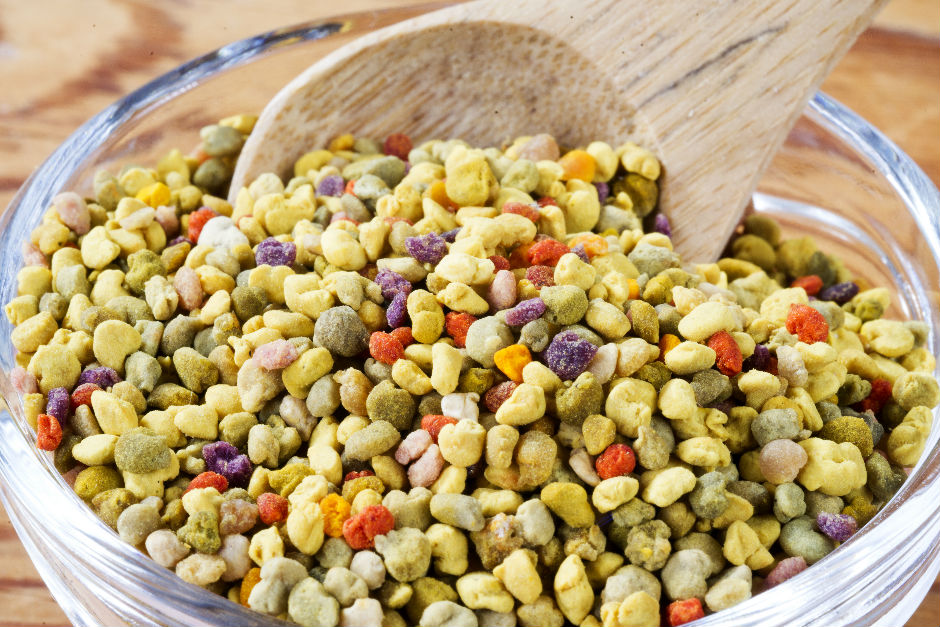
Bir An Önce Tanışmanız Gereken Şifası Kendinden Büyük Bir Besin: Arı Poleni

İsmini belki de ilk defa duydunuz ya da hali hazırda karşılaşıp güzelliklerinden ve şifasından pek de haberdar değilsiniz. Yazının geri...