30 Haziran 2017 Cuma

My Part


As the internship gains momentum, and the hotel opens for the tourist season, God continues to lead me into a season of rest. Last week I had a couple of meetings with the healthcare team and HR department of the Keystone Project, evaluating my progress over the last 4 months and looking forward to the summer. Together we decided that I need to continue to maintain a lighter work and ministry schedule in order to give the majority of my time to personal health and growth. I'll be involved in the internship from time to time, leading worship and going out on mission in the community, as well as working four days a week in laundry at the hotel. 

Pray for...

1)Grace to be obedient as the Lord calls me to rest in the busiest season of the year.
2)Readiness for the moments of ministry that will come up spontaneously over the summer.
3) Faith and patience as I depend on God to make the necessary changes in my heart and life.

He is God


quiet time by the creak


Thank you so much for your prayers. God has been at work in my heart. Here's a bit of what he's been teaching me.

For the last several months, even before the official beginning of this sabbatical season, God has been emphasizing to me the importance of being still. Psalm 46:10 has been the constant refrain:

"Be still and know that I am God. I will be exalted among the nations. I will be exalted in the earth."

The frequency with which the Lord impressed this on me caused me to wonder if I was missing something. I had already cut many things out of my schedule and lifestyle -  fewer work days, less ministry, careful sleep habits... Why do you keep telling to be still, God? How still do you want me to be?? During one quiet time I finally looked up the Hebrew text of this verse. Sure enough, there's a deeper meaning. The Hebrew command, "be still" could also be translated, "let yourself be weak" or "cause yourself to let go." This is one of my deepest struggles.

I am a recovering Pharisee. I have standards for myself, and imagine that God does too: be strong, do what's right, live a sacrificial life for the sake of Christ. These are not bad things, except that I most often seek to do them by myself, not by the power of Christ. The result is that I spend much of my time and energy struggling to maintain and support "my ministry" and "my life" in Christ, which I cannot do. I am too weak. I need to let go. God is God. He will be exalted regardless. In fact, it's only when I admit that I'm week and look to him be God over me, that I'm free to follow his lead.

I probably could have preached this to you before, but it's taken several months of coming to the end of myself and finding Christ there, to help me really get it. I don't have to be perfect. I don't need to know all the answers. I don't need the perfect strategic plan. I don't need to have hours of quiet time every day. I don't have to feel strong to step out in faith, to be available for God to use me. It's ok to struggle. That's how God refines us. That's when we get to know him for who is, when he can be exalted in our lives. It's grace. He is God.

Ministry Opportunities


Interns and internationals at a barbecue
(far left: Avery || 2nd from right: Dew)

There have been a lot of unexpected ministry opportunities this summer and I want to give you some names to be praying for. I still don't have an official leadership role in the internship, but God has given me the opportunity to come alongside several interns and reach out to some of the international students. Some of the international students' names have been changed for security reasons.

Pray for...

Amy and Avery: Amy is a third year intern on leadership staff. This is Avery's first year and Amy is discipling her. I've been working alongside them this month and may continue to do so into the summer as the Lord leads. Pray that Amy will be empowered to disciple Avery and that Avery will grow in evangelism and soon find someone to disciple.

Lilly and Lisa: international students from China. My roommate and I got to share the gospel with them on Monday while helping them learn how to use the laundromat. They are hungry for truth and asking questions. Lilly and her family are atheists, but she has Christian friends and has been reading the Bible. Lisa is an atheist too, but her grandmother was a believer. Pray that the seeds will bear fruit and that we will recognize when the harvest is ripe!

Dew, Jane, Bree, Polly and their friends: from Thailand. Amy and Avery and I, and several other interns have been reaching out to them. Dew is already a believer and her family have been for generations. Her friends are mostly Buddhist but several have shown interest in Christ. We've shared the gospel with them, been in their trailer home, played volleyball with them, and even spontaneously joined them in at a work party. Last Saturday night at our community worship service, Bree and Polly prayed to receive Christ, but it's difficult to tell for sure if they understood what they were doing due to language barrier. We see potential in Dew to reach out to her friends and are hoping to call her to discipleship soon. Pray for grace and wisdom as we share the gospel and the great commission with these young ladies.

Since you prayed...


Pic: Lilly and friend singing with us at worship last night

Updates on the specific requests from last post. These may sound like simple stories, but it has been a week full of praises for me, as I've seen God doing all these things!!

Lilly and Lisa: atheists from China. Lilly spontaneously came over to my house this week on her day off (I'm currently living with a family of 5). She ate lunch with us and played with the kids and we had the opportunity to share with her about Christ via the ancient Chinese character for righteousness. It consists of the character for "me" under the character for "lamb." The redemptive symbolism is beautiful: I can be righteous if I am under the Lamb of God. Lilly was really interested. Several other interns are also reaching out to her and her friends. 

√√ Continue to PRAY for their salvation!

Dew: believer from Thailand. One of the interns, named Faith, had been praying about discipling Dew. This week I got to take Faith with me to visit Dew. When Faith invited her to be discipled she said yes! She is the only believer among her group of friends here. Most of them are Buddhist. Dew is concerned about her level of English but she wants to grow and be encouraged. 

√√ PRAY that Faith will lead Dew well, and that Dew may become strong in the Lord and in boldness to share the gospel with her friends.

Amy (3rd year leader) and Avery (1st year intern):  Amy is strong in intercession and has a gentle spirit. Avery is more of a leadership personality and very outgoing. I had been working with them short term to empower Amy to disciple Avery. On Friday I had my last meeting with them, praying for them and releasing them for the rest of the summer. Amy is growing in leadership and confidence and Avery is growing in teachability. She has been reaching out to a girl named Gina, Buddhist from Mongolia, who is attracted to the kindness and joy she sees in the ministry interns. 

√√ PRAY that Gina may see Christ and that Amy and Avery will continue to grow and make the most of their time this Summer.

What's next?


I am beginning to consider what next steps might be for me, whether I will continue with the Keystone Project, help to start a new mission team here in the States, return to the Houston team, join the LA team, or begin assisting with disciple making movements overseas in places like India, Peru, or several African countries... As I have begun to ask this question, the Lord has continued to refine my heart and re-center my  focus on him. No answers yet, but growing in quietness and trust, waiting and seeking.

√√ Please PRAY for grace and peace and readiness to receive God's call to what he has next for me.

Oaxaca. San Mateo Capulalpan


For the last in our current series of posts on Oaxaca, we look at a close neighbor of Ixtlan, the mountain church of San Mateo Capulalpan. Following along a mountain road that winds southeast of Ixtlan, the first sight of Capulalpan is its imposing church, perched above a windswept atrium with panoramic views of the surrounding ridges of the Sierra Juárez
Between sheer, symmetrical towers, the severe classical facade rises in measured stages to a tall, triangular pediment. Nine steps lead up to the west entry, which is framed by subtly layered pilasters and sculpted cornices. 
   A carved inscription over the doorway is dated 1715, although another date, 1731, appears on the underchoir .
A simple statue of St. Matthew, the patron saint, holds up his gospel in the diminutive upper niche below a relief of the papal insignia. 
The nave is a model for several other Sierra churches. Roofed by a trapezoidal wooden ceiling, it is braced at intervals by carved tie beams. The centerpiece is an octagonal ceiling over the crossing—a complex mosaic of shaped and fitted cedar in mudéjar style. 
 
The Altarpieces
As at Ixtlan, the chief artistic legacy at Capulalpan is its spectacular collection of colonial wooden altarpieces, which come in all shapes, sizes and finishes.
   Closely fitted into the narrow apse, the gilded main retablo is a masterpiece in traditional Oaxacan style, dating from the 1730s. Rising in four tiers and five vertical columns to the roofline, the center pavilion of the retablo projects dramatically forward, its rectangular compartments framed by spiral columns wreathed with vines and cornices dripping with spindles. 
Carved foliage and arabesques proliferate throughout. A solemn, bearded statue of St. Matthew stands in the recessed center niche, surrounded by fourteen large, rectangular canvases portraying scenes from his life. 
As at Ixtlan, smaller, highly ornate retablos are angled on either side of the sanctuary arch.
  
Exceptional late baroque, mostly Churrigueresque altarpieces line the whitewashed nave. While some are gilded, others remain unfinished, their dark red cedar estípite pilasters lacking their final paint and gold leaf.
  
Several retablos incorporate archangels in the form of caryatids, displaying elaborately layered, ruffled tunics—a signature motif in the Sierra region. A few, even more ornate, smaller retablos have undulating, shield-like outlines with fanciful foliated fringes.
Among the numerous engaging figures of archangels, one superb, unfinished statue of a youthful, fresh faced but one-eyed St. Raphael stands out, fitted with stylized wings, ruffled skirt, wide sleeves and a lofty plumed headdress all carved from cedar. 
   Elsewhere, a carved and painted figure of God the Father (part of a Trinity sculpture) sits in an ornate frame also encrusted with archangels.
A number of fine colonial paintings stand out at Capulalpan, among the most notable being a sympathetic 17th century portrait of the youthful St. Rose of Lima, in the south transept. 
   Dressed as a novice, in one hand she holds up a bouquet with an image of the child Jesus, while from the other hangs an anchor with a representation of the city of Lima, Peru, of which she is the patron saint. 
text © 2017 by Richard D. Perry
color images by the author and courtesy of Felipe Falcón

San Juan Bautista Cuautinchán: the main altarpiece

In a post on our sister site, we review the diverse early murals at the Franciscan monastery of San Juan Bautista Cuautinchán, south of the city of Puebla. 
   Erected in the 1570s to a design of Francisco Becerra, the Spanish architect who designed Puebla Cathedral, the rugged, twin-towered church was built to last, despite suffering recurrent blows from earthquakes.

Among its early colonial treasures, the main altarpiece in the church stands out. Although reputed to be the earliest altarpiece of substance in Mexico, its actual origins and authorship remain in question.
   One story has that it was originally commissioned and fabricated, circa 1570, for the main altar of Franciscan church of the Five Wounds in the city of Puebla. In this version, Francisco Becerra, the eminent architect, may have been the author of the altarpiece, although other documents name Nicolás Tejeda de Guzmán, a noted painter, and Pedro de Brizuela, a sculptor, as principals.
  Then, in 1599 the mestizo artist Juan de Arrúe, who is believed to have painted some of the main panels, acquired it as part payment for other work and sold it to the pueblo of Tehuacán for their convento, then in completion, and undertook various alterations. 
   However, an earthquake severely damaged the church in Tehuacán before it could be installed, so the retablo was transferred to the community of Cuautinchán and duly installed in its church of San Juan Bautista in 1601. 
   Yet another version posits Arrúe together with his father, a Sevillian sculptor, as the authors of the altarpiece, which was actually created for Tehuacán. Damaged after the earthquake, it was restored in Puebla, and then, being out of scale with the rebuilt church at Tehuacan, passed on to Cuautinchán. Whatever the facts, its antiquity is undoubted.

Its structure is relatively straightforward, with the focus on the paintings. The compartments are simply framed by slender fluted and baluster columns in Renaissance Plateresque style and horizontal friezes with angel's heads.
The Cuautinchan retablo, upper tiers
The narrative program consists almost entirely of six large paintings, which we may attribute to Arrúe. They illustrate key episodes in the life of Christ in a sober if warm Renaissance style, tempered by a colorful Mannerist palette—perhaps reflecting his Andalusian heritage, or more likely the influence of the Sevillian painter Andrés de Conchawith whom the artist may have worked in Oaxaca. 
 
On the first tier we see a dramatic Annunciation, and a Nativity scene (Adoration of the Shepherds) which includes a traditional bagpiper.
   The center tier depicts a related Three Kings (Adoration of the Magi) and the Resurrection, while the top tier includes the Ascension and Pentecost. The Assumption of the Virgin in the center panel is a later work.
Across the foot of the retablo, the predella, represents the Apostles, in this case including, unusually, Judas Iscariot, without halo but holding the bag of coins on the extreme right (i), whose large, bent nose signifies his moral deformity.   
   Columns of smaller scale portraits of saints flank the retablo on either side. The only statue, in the central niche, may have originally portrayed St. Francis, but was changed for Tehuacán, whose advocation was La Purísima, as it remains. 
   After long years of neglect the altarpiece was first conserved in 1987, and more recently in 2006 when the paintings were restored.


Please review our previous posts on Pueblan altarpieces of note: TecaliPuebla CathedralCuauhtinchanAtlixco Third Order Atlixco San FranciscoSan José Chiapa
text © 2017 Richard D. Perry
color images by Niccolo Brooker and others.

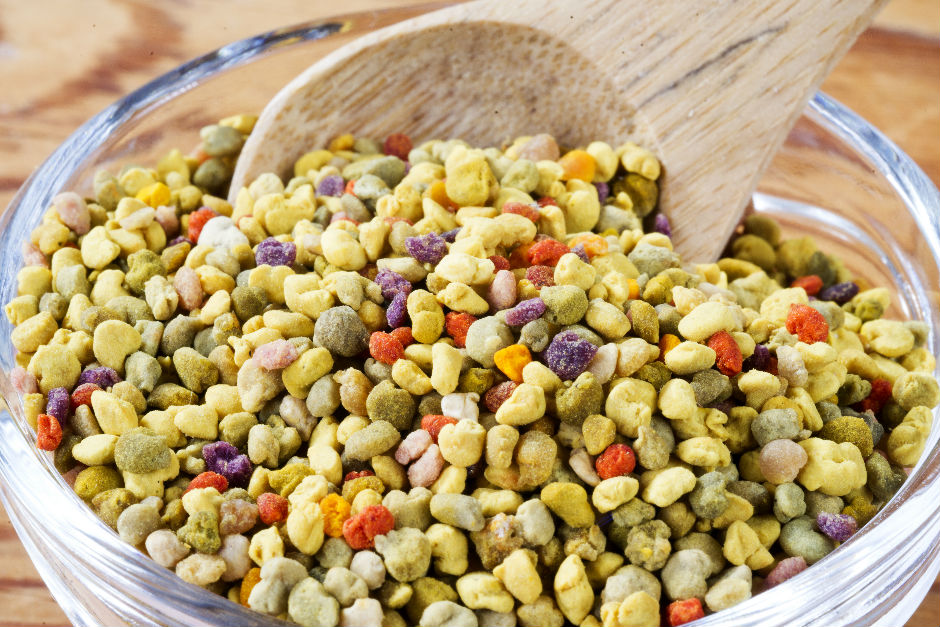
Bir An Önce Tanışmanız Gereken Şifası Kendinden Büyük Bir Besin: Arı Poleni

İsmini belki de ilk defa duydunuz ya da hali hazırda karşılaşıp güzelliklerinden ve şifasından pek de haberdar değilsiniz. Yazının geri...